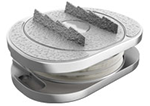
Choosing a Total Knee Replacement
In the past when orthopedic surgeons choose between the Zimmer NexGen and the Zimmer Persona, they are essentially choosing between unmatched historical data and modern, anatomical precision.
Because both systems are made by the same company, the Persona was actually engineered as the direct, next-generation evolution of the NexGen.
Surgeons would weigh several factors when choosing one over the other:
Why a Surgeon Would Choose the Persona
The Persona is often marketed as “The Personalized Knee,” and surgeons who prefer it usually point to its modern design tweaks, which allow for a more precise fit to a patient’s natural anatomy.
• Asymmetric and Morphogenic Design: The human knee is asymmetrical—the inside (medial side) is shaped differently than the outside (lateral side). The NexGen has a more symmetric, traditional shape. The Persona features an asymmetric tibial tray and a more contoured femoral piece. This means the implant matches the actual bone cut much better, minimizing the chance of the metal overhanging and irritating surrounding soft tissues or tendons.
• Finer Sizing Increments: Persona offers a massive array of sizes, including “narrow” profiles and 1mm increments for the plastic polyethylene liners. This allows the surgeon to finely tune the ligament tension and “balance” the knee, which can result in a more natural-feeling joint and better range of motion.
• Advanced Materials (Vivacit-E): Persona utilizes highly advanced plastic liners infused with Vitamin E. This antioxidant prevents the plastic from degrading and wearing down over time, making it highly attractive for younger or more active patients who need the implant to last 20+ years.
• Compatibility with Modern Tech: If a surgeon utilizes robotic assistance (like the ROSA robot) or smart-knee data tracking (Persona IQ), the Persona system is built to integrate directly with those technologies.
Why a Surgeon Would Choose the NexGen
Despite Persona being the newer model, the NexGen remains incredibly popular, and many veteran surgeons still view it as their gold standard.
• An Unbeatable Track Record: The NexGen has been used globally for over two decades. There are massive volumes of long-term data proving that a NexGen knee can easily last 15 to 20+ years. For a conservative surgeon, a “proven track record” trumps “new and improved” every single time.
• Surgeon Comfort and Reproducibility: Orthopedic surgery relies heavily on muscle memory and rhythm. If a surgeon has successfully implanted thousands of NexGen knees over 15 years, they know exactly how the instruments feel, how the bone cuts react, and how to handle any intraoperative surprises with that specific toolkit.
• Excellent Revision System: If a patient has severe bone loss or unique anatomical challenges from previous surgeries, the NexGen system has a legendary lineup of “revision” components (like the NexGen LCCK) that allow the surgeon to build out a highly stable, constrained knee joint when standard parts won’t suffice.
The Bottom Line
In clinical head-to-head trials comparing the two, both systems show excellent success rates and high patient satisfaction.
Ultimately, the choice usually comes down to surgeon philosophy. A surgeon focused on achieving a highly customized, anatomical fit for a younger, high-demand patient will often lean toward the Persona. A surgeon who prioritizes decades of predictable, time-tested registry data and absolute structural familiarity will often stick with the NexGen.
The Latest Knee Replacement Options
Yes, orthopedic technology has leaped forward significantly over the last few years. Today, the definition of an “advanced option” has shifted away from just changing the shape of the metal components and toward “smart” data tracking, robotic precision, and custom alignment.
The joint replacement landscape features several major advancements:
1. “Smart” Knee Implants (Persona IQ®)
Zimmer Biomet actually took their successful Persona design and created the Persona IQ, which is the world’s first FDA-approved “smart knee.”
• How it works: A tiny, pacemaker-sized sensor is embedded inside the stem extension of the tibial component.
• What it does: It automatically tracks your post-surgery metrics every day—including range of motion, walking speed, stride length, and step count. It securely transmits this data to your surgeon’s team, allowing them to monitor your physical therapy progress remotely and catch any recovery hurdles early.
2. Advanced Robotic-Assisted Surgery
While robots like Stryker’s Mako have been around for a while, the technology has reached incredibly sophisticated levels. Zimmer uses a robotic platform called ROSA® (which now features advanced AI planning software called OptimiZe).
• The benefit: Instead of relying on a surgeon’s eyesight and standard manual cutting guides, a robot uses a pre-operative 3D map of your exact bone structure. During surgery, the robotic arm guides the saw blade to make cuts precise down to a fraction of a millimeter. This drastically reduces accidental damage to surrounding ligaments and soft tissue, leading to less post-op pain and a faster recovery.
3. Kinematic Alignment Philosophy
For decades, the standard approach was “mechanical alignment”—cutting the bone to make every patient’s leg perfectly straight (at a strict \bm{90^\circ} angle to the mechanical axis), regardless of how their leg looked before arthritis.
• The new way: Many modern surgeons now use Kinematic Alignment. Using robotic data, they place the implant to match your knee’s original, pre-arthritic custom angles. If you were naturally a little bow-legged or knock-kneed your whole life, the surgeon replicates that exact custom anatomy. Patients often report that kinematically aligned knees feel much more “natural” and less like a mechanical tool.
4. Cementless Implants (Bone Ingrowth)
Traditionally, knee components are held in place using a specialized medical bone cement. While highly effective, cement can degrade or loosen over 15–20 years.
• The advancement: Highly advanced “cementless” options feature textured, porous metal surfaces (often 3D-printed) that mimic real bone structure. The surgeon presses the implant tightly into the bone, and over the following weeks, your natural bone actually grows directly into the metal. This creates a biological bond that can potentially last much longer than traditional cement, making it an excellent option for younger, active patients.
5. Muscle-Sparing Surgical Techniques
Beyond the implants themselves, how surgeons get into the knee joint has evolved. Techniques like the Subvastus approach are gaining massive traction. Instead of cutting straight through the quadriceps tendon above the kneecap (the traditional way), the surgeon gently lifts and moves the muscle to work underneath it. Preserving the integrity of the thigh muscle means patients can often stand, walk, and lift their leg hours after surgery, making same-day, outpatient discharge much more common.
Are these options always better?
Not necessarily for everyone. A standard, manually placed, cemented knee implant still has a phenomenal 95%+ success rate at the 15-year mark. Advanced tech like robotics and smart sensors are incredible tools, but they add cost and require highly specialized surgeon training.
If you are exploring options for yourself or a loved one, the most important question to ask a surgeon isn’t just “Which implant do you use?” but rather, “Do you utilize robotic assistance or kinematic alignment, and what is your personal success rate with that approach?”
The short answer is yes, but the differences are rarely about the metal and plastic implants themselves. Instead, the gap between Europe and the US comes down to how fast software, surgical guidance, and niche specialized implants clear regulatory hurdles.
Because the major orthopedic giants (Zimmer Biomet, Stryker, DePuy Synthes, and Smith & Nephew) are global powerhouses, they try to launch their main hardware everywhere simultaneously. However, differences emerge due to the distinct approval processes of the US FDA and Europe’s CE (Conformité Européenne) Mark.
The main categories where Europe occasionally has options not yet widely available or approved in the US include:
1. Cutting-Edge Augmented Reality (AR) Guidance
While robotic surgery is massive in the US, Europe has been a primary testing ground for ultra-lightweight Augmented Reality (AR) surgical navigation.
• The European Option: For example, European regulators recently granted the CE Mark to advanced AR smart-glass systems like Pixee Medical’s Knee+ NexSight.
• How it works: Instead of a massive, multi-million-dollar robotic cart in the operating room, the surgeon wears a pair of lightweight AR glasses. The software projects a digital overlay directly onto the patient’s knee, tracking bone cuts and alignment in real-time.
• The US Status: These highly advanced, minimalist AR systems usually roll out across France, Germany, and Belgium first while awaiting the strict FDA 510(k) clearance process in the US.
2. Custom-Molded Multi-Compartment Implants
In the US, if you have severe arthritis in two out of the three compartments of your knee, standard protocol almost always dictates a Total Knee Replacement.
• The European Option: European surgeons more frequently utilize customized, multi-compartment partial knees (like bi-unicompartmental or combined partial implants). Companies like Conformis (and various European boutique manufacturers) have had specific configurations of 3D-printed, patient-specific partial implants clear European standards faster or with broader application scopes than in the US.
• The Benefit: It preserves the patient’s healthy cruciate ligaments (ACL and PCL), keeping the natural “feel” of the knee while only resurfacing the damaged tracks.
3. “Boutique” and Niche European Brands
The US market is heavily dominated by four or five massive players. Europe, however, has a thriving market of localized, high-end orthopedic companies that choose not to cross the Atlantic because the cost of FDA approval is too high for a smaller customer base.
• Examples: Brands like Waldemar Link (Germany), Medacta (Switzerland), and Ampli (France) create highly sophisticated, anatomically designed knee implants.
• The Appeal: Medacta, for instance, heavily pioneered specialized efficiency toolkits and unique kinetic alignment systems that gained massive traction in Europe years before becoming widely accessible in mainstream US hospital networks.
4. Specialized Ceramic Coatings (Hypoallergenic Options)
Nickel and metal allergies are a major concern for a small percentage of knee replacement patients.
• The European Option: Europe has long favored advanced ceramic coatings, such as Oxinium (oxidized zirconium) or specialized Titanium Niobium Nitride (TiNbN) coatings, to completely seal off the metal and prevent allergic reactions.
• The US Status: While Oxinium is available in the US (primarily through Smith & Nephew), European surgeons have a broader, more competitive selection of hypoallergenic “gold-colored” coated implants from multiple local brands that aren’t distributed in America.
The Regulatory Flip Side
It is worth noting that this regulatory lag goes both ways. Because Europe implemented stricter medical device regulations (MDR) recently, the paperwork backlog in Europe has slowed some things down.
For example, the Persona IQ “Smart Knee” (the implant with the built-in data tracking microchip) was cleared by the FDA and implanted in US patients well before it navigated the complex web of European data privacy (GDPR) and medical device approvals.
Ultimately, if you are getting a knee replacement in the US, you aren’t missing out on superior materials—the metal alloys and advanced plastics used here are the absolute global standard. The primary difference is simply which digital navigation “toys” or niche local brands the surgeon has access to in the operating room.
Europe Knee Replacement Options
Europe has an incredibly robust joint preservation market. Because the European regulatory pathway (the CE Mark) handles biomaterials and tissue engineering differently than the US FDA, European surgeons often gain access to off-the-shelf biological cartilage repairs earlier.
The availability of these advanced techniques breaks down as follows across the Atlantic:
1. Cartilage Regeneration: Europe’s Major Advantage
While the US relies heavily on MACI (which requires a two-step surgery and a laboratory to grow cells over several weeks), Europe has approved “off-the-shelf” single-step biological solutions that are not yet available in the US market:
• GelrinC (Regentis Biomaterials): This is a massive advancement currently available in Europe. It is a completely cell-free, synthetic hydrogel implant. A surgeon can insert it into a cartilage defect during a single, short procedure. It acts as a temporary 3D scaffold that guides the patient’s own local cells to naturally migrate in and rebuild healthy cartilage while the gel safely dissolves. It is currently undergoing the FDA approval process in the US.
• Spherox (CO.DON): Approved by the European Medicines Agency (EMA), this advanced therapy uses a patient’s own cartilage cells, but instead of gluing them onto a flat sheet like the US MACI system, it formats them into tiny, three-dimensional “spheroids.” These are injected arthroscopically, allowing for highly targeted adherence to uniquely shaped joint craters.
2. The “Shock Absorber” (The MISHA Knee System)
• The Status: The MISHA Knee System (developed by Moximed) is a rare example where the US actually gained primary approval first (via an FDA De Novo clearance).
• European Availability: While its predecessor (the Calypso system) underwent extensive clinical trial testing in European countries like Belgium and Poland, the current commercial version of the MISHA system is primarily distributed through designated orthopedic centers in the United States.
3. Advanced Cellular Injections (PRP & Stem Cells)
The regulatory divide here is significant, particularly regarding what surgeons can do in a single day:
• In Europe: Regulatory bodies allow more leeway for “expanded” cell therapies. European clinics frequently offer advanced, cultured stem cell treatments where a patient’s cells are drawn, grown in a lab to massive concentrations over a few weeks, and reinjected.
• In the US: The FDA strictly forbids multiplying or altering cells in a lab overnight for standard orthopedics (deeming it “more than minimally manipulated”). US surgeons must use BMAC (Bone Marrow Aspirate Concentrate), where they draw the cells and spin them down in a centrifuge right in the operating room during the exact same procedure.
4. Gene Therapy (IL-1 Blockers like GNSC-001)
• The Status: The highly anticipated gene therapy injections designed to turn off the biological triggers of arthritis are still strictly in the global clinical trial phase. Because these involve modifying cellular messengers, neither European regulators nor the FDA have given them full commercial approval yet. However, the scientific data is presented globally, and phase-level clinical trials for these types of disease-modifying injections operate simultaneously across both US and European university hospitals.
If you are looking for advanced hydrogels and single-step cartilage patches to fix a specific defect before widespread arthritis sets in, Europe frequently holds a regulatory edge.
The field of biological joint preservation is experiencing a major surge. Orthopedic medicine is actively shifting from replacing joints with metal and plastic to repairing, unloading, or growing them back using biological materials.
If you or a loved one are trying to avoid or delay a total knee replacement, the latest treatments fall into three main categories: structural cartilage regeneration, shock-absorbing implants, and advanced cellular injections.
1. Structural Cartilage Regeneration (For Partial/Focused Damage)
If the cartilage loss is localized (a specific hole or crater from an injury or early arthritis) rather than “bone-on-bone” across the entire joint, true biological restoration is happening right now:
• MACI (Matrix-induced Autologous Chondrocyte Implantation): This is the current FDA-approved gold standard for cartilage regeneration. A surgeon takes a tiny, healthy sample of your own cartilage via arthroscopy and sends it to a specialized lab. The lab grows millions of your own cells and embeds them onto a collagen membrane. In a second procedure, the surgeon glues this “cartilage patch” into the damaged area, where it matures into smooth, healthy joint cartilage.
• Allgraft / OATS (Osteochondral Allograft Transplantation): If the damage includes both the cartilage and the underlying bone, surgeons can transplant a perfectly sized plug of real, living bone and cartilage from a young donor. This acts like a biological pothole repair.
What’s on the Horizon (2026/2027 Trials): The federal government’s ARPA-H agency is currently fast-tracking massive funding for projects like “NOVAJoint” (led by Columbia University and other institutions). They have successfully engineered 3D-printed, living human knee scaffolds infused with stem cells. In animal models, the scaffold holds the weight of the body while the stem cells grow a brand-new, completely biological joint, and the scaffold safely dissolves. First-in-human clinical trials are projected to begin very soon
2. The “Shock Absorber” Implant (The MISHA Knee System)
For patients with modern, active lifestyles who have wear-and-tear on the inner (medial) side of the knee but want to completely avoid a joint replacement, the MISHA Knee System is a major advancement.
• How it works: It is an implant, but it does not replace any bone or cartilage. Instead, it is a mechanical shock absorber that is implanted under the skin, sitting right alongside the knee joint on the outside of the bone.
• The benefit: Every time you take a step, the device absorbs up to 30% of the peak force, transferring the pressure away from the worn-out cartilage. Because it preserves all your natural bone, it acts as a highly effective bridge therapy, drastically reducing pain while leaving the door completely open for future biological treatments.
3. Advanced Injections & Disease-Modifying Injections
While standard cortisone or hyaluronic acid “gel” shots only provide temporary lubrication and mask pain, new injections aim to alter the actual environment of the joint:
• Next-Generation PRP & Bone Marrow Concentrate (BMAC): Rather than basic Platelet-Rich Plasma, physicians are using highly concentrated, leukocyte-poor PRP and bone marrow aspirate. While they don’t fully regrow an entire bone-on-bone joint yet, the latest clinical data shows they significantly calm chronic inflammation, slow down the rate of cartilage breakdown, and provide profound pain relief for mild-to-moderate arthritis.
• Interleukin-1 (IL-1) Gene Therapy: This is one of the most exciting developments in clinical trials right now. A gene therapy called GNSC-001 recently received an expedited “Regenerative Medicine Advanced Therapy” designation from the FDA. It uses a single injection to introduce a protein that blocks Interleukin-1—the primary chemical messenger responsible for causing joint inflammation and actively eating away at knee cartilage.
4. Cutting the Pain Signals: Cooled Radiofrequency Ablation (COOLIEF)
If the cartilage cannot be saved but a patient wants to delay or completely bypass major surgery, surgeons are using water-cooled radiofrequency energy to safely stun the genicular nerves (the specific sensory nerves that transmit pain signals from the knee to the brain). It doesn’t regrow cartilage, but it can shut off severe arthritic pain for 1 to 2 years at a time without requiring a single incision inside the joint.
The Realistic Caveat
The primary factor dictating whether you can use these options is the extent of the arthritis.
Regenerative options (like MACI or stem cell therapies) require a relatively healthy “sandbox” to work in—meaning they are incredibly successful for people with localized cartilage damage or mild-to-moderate wear. If a knee has progressed to severe, widespread, “bone-on-bone” osteoarthritis where the joint has structurally shifted, traditional or robotic-assisted replacements remain the most predictable way to achieve long-term, pain-free mobility.
Are you looking into these alternatives to help delay a potential surgery, or are you exploring options for early-stage joint wear?
Contact us now!
Can I get stem cell treatment to avoid knee replacement or hip replacement?
No, Even the most advanced million-cell expanded stem cell therapy in a top-tier German clinic cannot defy basic physics. If a hip or knee has progressed to a structural deformity, where the joint geometry has shifted and the mechanical alignment of the leg is altered, stem cell injections cannot rebuild that lost architecture. In those advanced stages, structural joint replacement remains the standard choice for reliable relief.
