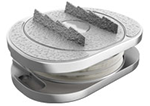
The hip replacement landscape is divided between time-tested legacy systems and highly advanced, anatomically precise modern options. The technology has evolved to focus heavily on preserving muscle, minimizing dislocation risks, and using robotics to perfectly match a patient’s unique pelvic mechanics.
Here is the comprehensive analysis for total hip arthroplasty (THA).
1. Classic vs. Modern: Why a Surgeon Chooses Specific Hip Systems
When an orthopedic surgeon selects a hip implant, they are picking a combination of three pieces: a femoral stem (inserted into the thigh bone), a ball (ceramic or metal), and an acetabular cup/liner (placed in the pelvic socket).
The Legacy/Traditional Choice (e.g., Zimmer Taperloc® or standard Echo®)
• The Philosophy: “If it isn’t broken, don’t fix it.” Systems like the Taperloc stem have been used for over 30 years with a flawless track record.
• Why choose it: These traditional rectangular or wedge-shaped stems offer absolute predictability. For patients with standard anatomy and good bone density, a legacy stem provides an incredibly tight, reliable wedge-fit inside the femur that can easily last 20 to 30 years.
The Modern/Anatomical Choice (e.g., Zimmer Z1® Triple-Taper or Avenir Complete®)
• The Philosophy: Replicating natural anatomy while making the surgery less destructive.
• Why choose it:
• Triple-Taper Cones: Older stems were straight and blocky (putting a “square peg in a round hole”). Modern stems feature a triple-taper design—they are tapered in three different dimensions to mirror the natural, shifting contours inside the thigh bone. This drastically reduces the risk of fracturing the femur during insertion.
• Collared Stems: Many of the newest stems feature a small metal “collar” or lip at the top. This lip rests directly on the cut surface of the bone, preventing the implant from settling or rotating out of place after surgery, increasing post-op stability by up to 66%.
• Designed for Anterior Access: Stems like the Avenir Complete are specifically shortened and curved to be easily maneuvered through tiny, muscle-sparing incisions.
2. Advanced Recent Options (The Modern Frontiers)
If you are looking at the absolute cutting edge of hip replacement right now, the most significant advancements center on how the hip is aligned to your spine and how the muscles are protected.
• Spinopelvic Mobility Planning (AI Software): One of the leading causes of hip dislocation is that a patient’s pelvis tilts when they sit down versus when they stand up. Modern planning software (like Zimmer Biomet’s ONE Planner Hip) takes X-rays of you sitting and standing, uses AI to analyze how your spine moves, and tells the surgeon the exact custom angle to place the socket cup so it never pinches or pops out when you sit in a low chair.
• Robotic-Assisted Placement (Mako & ROSA® Hip): Robotic arms are now heavily utilized in hip replacements. The robot allows the surgeon to ream out the pelvic socket and place the cup with an accuracy of within 1 degree of the pre-surgical plan. This near-perfect alignment minimizes leg-length discrepancies (preventing that uneven “one leg feels longer” sensation).
• Advanced Bone-Ingrowth Coatings (Hydroxyapatite & OsseoTi®): Instead of using bone cement, modern cups and stems are 3D-printed with porous, highly textured titanium that mimics the microscopic structure of real bone. They are coated in Hydroxyapatite (a natural bone mineral). Your body recognizes this mineral, causing your real bone to aggressively grow directly into the metal implant within weeks, creating a lifetime biological bond.
• The “Bikini” Direct Anterior Incision: This is a major evolutionary step in the direct anterior surgical approach. Instead of making a vertical cut down the front of the thigh, the surgeon makes a curved incision directly within the natural skin crease of the groin (where a bikini line or underwear sits). It cuts zero muscles, results in a virtually invisible scar, and allows active patients to walk hours after surgery with almost zero dislocation restrictions.
3. The European vs. US Availability Divide
Because Europe’s CE regulatory pathway historically allowed for faster approval of unique biomechanical geometries, the European hip market has embraced a few variations that are rarer or strictly controlled in the US.
• Hip Resurfacing (The Birmingham Hip / Ceramic Resurfacing): Instead of cutting off the neck of the femur, hip resurfacing simply shaves down the ball and caps it with a metal or ceramic dome.
• The European Edge: It is incredibly popular in Europe for younger, highly active men because it preserves more natural bone. Europe has broader access to next-generation ceramic-on-ceramic resurfacing implants.
• The US Status: The FDA severely restricted metal-on-metal resurfacing due to historical issues with metal debris, making it harder to access in the US unless seeing a highly specialized, high-volume surgeon.
• Aggressive European Stem Designs (Dual-Mobility & Boutique Brands): European boutique brands (like Medacta in Switzerland or Waldemar Link in Germany) have long pioneered highly aggressive, curved stems designed to wedge tightly into European patient demographics without cement. Furthermore, Dual-Mobility cups (a cup within a cup that offers two points of movement to completely eliminate dislocation) were standard practice in France and Italy for a decade before gaining mainstream traction in America.
• The US Advantage: Just like with knees, the US leads the world in smart technology integration. Advanced remote-monitoring data platforms and highly complex robotic software networks routinely roll out across US hospital systems first because the funding and tech infrastructure are highly consolidated.
In the hip replacement category, the regulatory divide between Europe and the US is even more pronounced than it is for knees.
Historically, Europe has embraced preservation-first designs and advanced materials much faster than the US FDA. Because the FDA has strict rules regarding wear debris and long-term metal exposure, many hip technologies are actively utilized across Europe while remaining strictly prohibited or locked in lengthy clinical trials in America.
The primary hip replacement options available in Europe that you cannot easily get in the US include:
1. Advanced Ceramic-on-Ceramic Hip Resurfacing
Hip resurfacing is an alternative to a total hip replacement. Instead of cutting off the entire neck of the thigh bone, the surgeon simply shaves down the femoral ball and caps it with a smooth dome, preserving your natural bone.
• The European Reality: Europe is the global epicenter for this procedure. They use advanced Ceramic-on-Ceramic (CoC) resurfacing systems (like the H1 Hip Resurfacing System or ReCerf). Ceramics completely eliminate the risk of metal debris, making this an incredibly popular option for young, active European patients who want to run, lift weights, or do heavy labor post-surgery.
• The US Reality: The FDA strictly banned or withheld approval for modern ceramic-on-ceramic resurfacing systems due to historical caution over structural cracking (even though modern ceramic matrix composites are virtually shatterproof). The only FDA-approved resurfacing device in the US is the older Birmingham Hip Resurfacing (BHR), which is made of metal-on-metal and heavily restricted to specific patient demographics.
2. Custom 3D-Printed Acetabular Cages (For Complex Cases)
When a patient needs a revision hip replacement (replacing an old, failing implant) and has massive pelvic bone loss, the socket must be completely reconstructed.
• The European Reality: European surgeons frequently utilize completely customized, 3D-printed titanium pelvic cages tailored to the patient’s precise CT scan. Because European regulators allow local “custom-made device” exceptions for patient-specific anatomy, boutique manufacturers in Germany, Switzerland, and Italy can print a custom pelvis implant and have it in the operating room in days.
• The US Reality: While custom implants exist in the US, the FDA requires rigorous compassionate-use exemptions or incredibly strict, lengthy approval pathways for highly customized structural hardware. Consequently, US surgeons more frequently rely on modular, off-the-shelf titanium “wedges” and augments to piece together a missing socket rather than printing a single custom block.
3. Customized “Short-Stem” Femoral Implants
When doing a traditional hip replacement, the metal stem is jammed deep down into the hollow canal of the femur.
• The European Reality: Europe has championed “short-stem” philosophy for over a decade. Implants like the MATHYS Moovis or specialized short stems by Waldemar Link sit only in the very top neck of the femur. European companies also offer completely customized, 3D-printed short stems designed to match the precise internal curvature of a patient’s specific bone canal.
• The US Reality: The US market remains overwhelmingly dominated by standard-length straight or slightly tapered stems. While short stems exist in the US, customized, patient-specific 3D-printed stems are largely unavailable due to the FDA’s strict classification of the femoral canal as a high-stress zone requiring standardized, mass-manufactured metallurgy.
4. Direct Anterior “Efficiency” Toolkits
The Direct Anterior Approach (DAE)—operating from the front of the hip without cutting muscles—is highly popular in both regions. However, how it is performed differs.
• The European Reality: Swiss and French orthopedic groups heavily pioneered minimalist, single-use mechanical traction devices that attach right to the operating table. These toolkits allow a European surgeon to perform a muscle-sparing anterior hip replacement quickly, without needing a massive, specialized, multi-million-dollar orthopedic table.
• The US Reality: US hospitals are heavily invested in large, specialized traction tables (like the Hana table) to position the leg. While highly effective, it restricts the surgery to major hospital wings that can afford the footprint and cost of the infrastructure, whereas European kits are designed to be highly portable for smaller surgical clinics.
Summary of the Trade-Off
If you are a young, highly active individual looking to preserve your natural thigh bone through ceramic hip resurfacing, traveling to Europe (especially the UK, Germany, or Belgium) offers options that simply do not exist in the US.
Contact us now!
Can I get stem cell treatment to avoid knee or hip replacement?
No, Even the most advanced million-cell expanded stem cell therapy in a top-tier German clinic cannot defy basic physics. If a hip or knee has progressed to a structural deformity, where the joint geometry has shifted and the mechanical alignment of the leg is altered, stem cell injections cannot rebuild that lost architecture. In those advanced stages, structural joint replacement remains the standard choice for reliable relief.
